
A Green Book for AI apps
Where to build, where to borrow, and how to leave.
I use software as a creative instrument: in workflows, publications, client systems, and in all the quiet machinery that keeps institutions pulsing through connected ideas. I’ve now lived through two platform shifts up-close: the dawn of the consumer internet and the explosion of Web 2.0's networked creativity.
The lesson that stuck is simple: the most exciting tools are rarely the safest place to store your work.
Since then, I’ve come to think about software apps the way I think about roads: no matter how promising they feel today, they only truly matter if they let you move your work tomorrow. The current wave of AI-driven tools is no different.
What follows is a custom guide to the software stack I currently use when the work is important enough to ship, and to keep: a map of resources for fellow travelers. These apps are relatively cheap right now, useful immediately, but, crucially, unlikely to disappear without warning.
Consider this a collection of best-practice notes from the messy, dusty, and always unpredictable journey of contemporary digital creative production.
The Negro Motorist
In 1936, Victor Hugo Green, a travel writer based in Harlem, New York, began publishing The Negro Motorist Green Book as a practical guide for Black travelers moving through Jim Crow America: where you could eat, sleep, refuel, and keep going without being turned away or put in danger.
The Green Book was a safety instrument under segregation and racial violence, a tool for mobility when the environment was hostile, arbitrary, and unevenly dangerous. Its historical significance, and prescience, lies both in what it contained and in what it implied: that for a certain cohort — Negro Motorists in the first half of the 20th century — even an ordinary activity like travel required sophisticated and updated situational awareness.
The point was not aspiration, even though that came later, too. It was navigation: how to keep moving through a landscape where the rules and their enforcement were inconsistent and the definition of safety could change from town to town. The guide’s power also came from refusing romance, or even overt political discourse. It treated movement — and community — as a practical problem solved by lists, routes, and verified stops.
Between 1936 and 1966, Victor Hugo and his wife Alma Duke Green documented an informal infrastructure of Black-owned and Black-welcoming enterprises, making it plain that “freedom of movement” was conditional — negotiated stop by stop, sometimes even door by door.
The Green Book was about survival inside a system of laws, customs, and institutional practices that enforced racial subordination in the United States from the late 19th century through the mid-20th century. It has now become — through the inexorable passing of time and the well-deserved attention of mainstream popular culture — an archive of the extreme measures people had to take to live normally in an abnormal system.
Maps are never neutral, and “safety” is always socially produced.
Risk is unfairly distributed, even inside something as banal as travel, or as contemporary as software adoption.
“Watch the driver ahead — you can’t be sure whether or not he’ll signal when he turns.”
Safe Driving Rules, #5. The Green Book, 1946

The Algorithmic Clerk
What does a Green Book for digital work mean? Ideally, it’ll map out the tools and companies where you’ll be treated fairly. Where the door will still open late and where you can keep working when the sun goes down. It’s less about hype or valuations and more about knowing which resources won’t leave you stranded in the long run.
AI-driven software requires both kinds of consideration in 2026: an ethical map of “safe harbors” where real and durable work can live, and a practical guide to the tools that reliably deliver new creative affordances.
In a market inflated by cheap AI, where multiple accounts estimate that exposure concentrates in more educated, white-collar occupations — while impacts and bargaining power vary sharply across groups and sectors — major employer surveys show that firms across the globe expect AI to dramatically reshape work. Some, as the last couple of years have shown, already anticipate and plan for significant human workforce reductions.
For knowledge workers, whose day now runs through models, prompts, dashboards, and invisible policies, competence means not just doing the work, but doing it in ways these systems can parse and remember. It also means moving through a landscape where access, pricing, and “what counts as work” can shift very suddenly. You don’t want your livelihood stored in platforms that vanish, pivot, or lock the doors without warning.
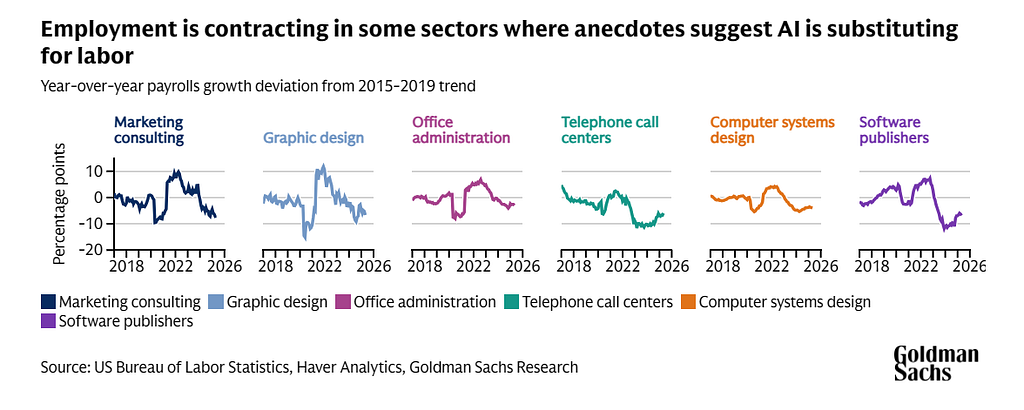
Even though this essay uses the metaphor of The Green Book, it’s important to note that the stakes are not comparable. Jim Crow travel was structured by racial terror, state-backed exclusion, and real physical danger: a set of existential threats, not of market or employment inconveniences. But the navigation-under-structural-risk problem is increasingly similar in texture.
From here on in, white-collar workers entering an AI-shaped landscape will have to learn to chart the course of their careers differently: through territories they don’t control, under rules that can change overnight, where access can be denied without explanation, and where “safe” often means having a credible fallback and a way to keep moving independently.
Disruption, as usual, will be unequally distributed: education, class, race, citizenship status, and even credential signaling will all increasingly shape who gets stopped, rerouted, and pushed off the road.
The Green Book offers a possible methodology of resistance: don’t confuse novelty with safety, don’t build your projects on top of a tool without exports, don’t treat a “magical” product as permanent infrastructure — and always know when to leave.
So here is a road atlas for your digital work, whether you’re a solo operator, creative lead, founder, marketer, team manager, or any of the other millions of algorithmic clerks going through these societal changes: five safe stops I base professional projects on, a few high-yield bets I use with my bags packed, and the outer limits of what’s currently possible.
https://medium.com/media/0e7ceba4b53fc0d8ae2f10e0d875a753/href
Rules of the Road
Whenever the software market is overheated, tools usually fail slowly, like the softening deformation of an asphalt road on an unforgiving summer afternoon. Pricing flips, exports vanish, access tightens, a feature becomes “premium”, a company pivots.
I score every app I use against five plain criteria: durability, portability, redundancy, composability, and cost realism.
These are not abstract, idealistic principles, but the practical inheritance of a philosophy of open source, open networks and protocols, and the right to repair. I believe in systems that endure, interoperate, and let you rebuild.
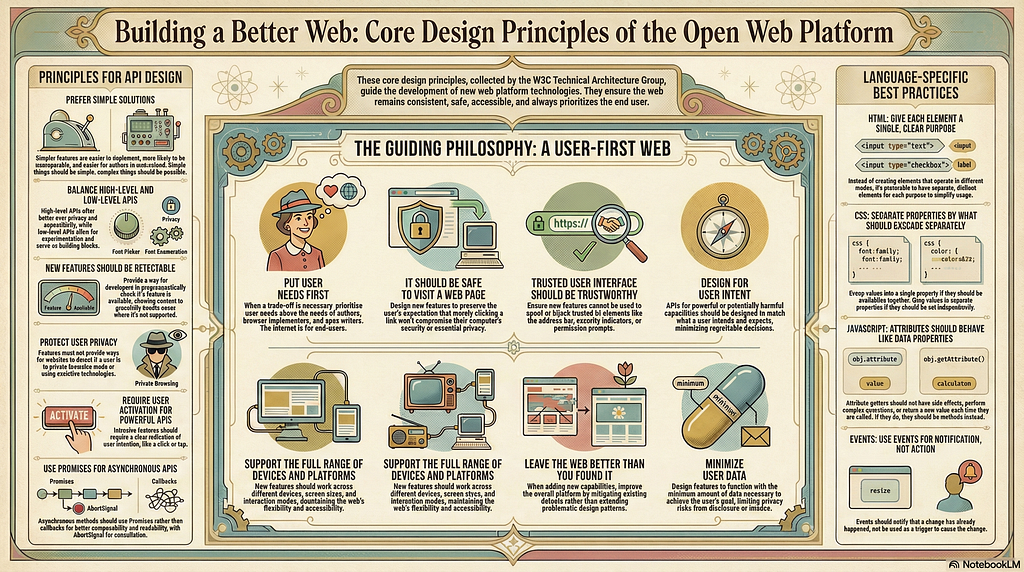
Durability is the “will this place still be open in three years?” test: business model, runway, incentives, and whether the tool sits on infrastructure that tends to persist. Important software should be treated like a utility, and be able to survive a specific company’s lifespan if users and communities can maintain, fork, and redistribute it under sensible terms.
Durability matters because professional work is compounding: if the tool disappears or “pivot-kills” your workflow, you lose features, momentum, institutional memory, and trust.
Portability asks a harsher question: “If I had to leave tonight, could I take my work with me in a usable form?” This is where open web protocols are an important reference point: the web works at scale because identity, data formats, and protocols enable movement between agents, not captivity inside one vendor’s establishment.
Ideas around the Fediverse extend that logic to social networks: ActivityPub and the ATP are federation protocols where servers can share information without belonging to any single company.
Portability matters because it turns migration from a crisis into a routine. Clean exports, sane APIs, and open formats are the digital version of the right to repair consumer hardware electronics and other devices.
Redundancy is portability plus discipline: not only “can I leave,” but “can I keep a second home warm so I’m never stranded?”
The Fediverse is redundancy-as-architecture: many independently managed instances, interoperating through a shared protocol, so no single outage or owner decision can kill the network.
In platform terms, redundancy means mirrorable backups, periodic exports, and a fallback surface. It matters because hostile environments rarely fail politely. Redundancy converts sudden shutdowns, paywall cliffs, and account bans into an inconvenience instead of a catastrophe.
Composability measures whether a tool plays well with others, and the degree to which it can sit inside a larger ecosystem of workflows without demanding total allegiance.
You should be able to swap software components, like LEGO, without rebuilding everything. Open-source culture reinforces this by treating interoperability and reuse as virtues, not threats. Licensing and community norms encourage recombination rather than enclosure.
Composability matters because the durable stack is rarely one piece. It’s more akin to a choreography, or an orchestra. Tools that refuse integration eventually ask you to rebuild your whole life around them, and that’s where the lock-in begins.
Cost realism is the $1.4 trillion, “what happens when the subsidy ends?” question. As widely and extensively documented, most AI products are currently priced like customer acquisition, not like mature infrastructure.
When the compute costs and the free capital music stops, the bill will most certainly arrive in the form of higher tiers, throttles, reduced exports, or “enterprise-only” features.
The open-source and open-protocol worldviews offer a powerful hedge against the current all-you-can-eat model: when robust alternatives exist, you can route around price shocks. When everything is proprietary, you pay whatever the gate demands.
https://medium.com/media/a97615152d95e1b4fc103139358f0dab/href
Fool Me Twice
I’m now just old enough to know that the case for prudent digital travel can be made without necessarily reaching for metaphors from the 1930s.
My first email account was created in ’94, on Hotmail. That was the year Geocities was created, “ the world’s first major online publishing network” that allowed millions of users to create personal homepages for free. In now classic internet history fashion, the web hosting service first started and became notable as a fervent community of passionate amateurs, then slowly introduced paid premium features and advertising before going public in 1999.
At the height of the dot-com-bubble, Geocities was the third-most visited website on the web. It was acquired by Yahoo! soon after and began the soon-to-be predictable and unfortunate process of making things worse and unbearable for its users. I never inhabited Geocities’ wild landscape — more of an IRC traveler in those days — but I witnessed what many friends at the time described as a feeling of homelessness, when the bubble burst and the lights went out.
About ten years later, I did commit enormous effort, time, and affection to an up-and-coming, real-time, Web 2.0 feed aggregator called FriendFeed.
In hindsight, it’s not surprising that the service, created by the likes of Bret Taylor and Paul Buchheit, anticipated so many features of the web that we now take for granted — and many others that the Fediverse crowd is still struggling to implement, twenty years later. Like a unified timeline, or lifestream, that is customizable and pulls information from all kinds of different sources like blogs, social networks, email, and other web protocols like RSS. It was beautiful while it lasted.
Lifestreams was already my idea that instead of keeping my information in separate pieces of digital Tupperware with some of it in this app, and some of it in that app, and some of it in the file system, and some of it in my Web browser, and some of it on my laptop, and some in my palm, and some in my cell, and blahblahblah — I didn’t want to do that. I wanted every information object I owned arranged in an electronic diary or journal or narrative. Or ‘Lifestream’ is what I call it.
David Gelernter (2009). Lord of the cloud. Edge.
You already know how the story ends: on August 10, 2009, Facebook agreed to acquire FriendFeed. The one million or so users still struggled for a minute to compose a new, open version of the service, but the tide of capital and circumstance in Silicon Valley has almost always prevailed over such valiant efforts.
That time around, I felt the burn first-hand. FriendFeed was my first real lesson in the difference between a place and a lease. I watched, in horror, a beloved tool that felt and behaved like the future get absorbed into a larger, indifferent machine.
The lesson here isn’t that good ideas either fail or get coopted by major corporations — that’s just standard operating procedure. The learning is that one should always trust the boring infrastructure more than the brilliant interface: open protocols, portable archives, and safe travels.

The Safe Stops
Before the map begins, a note about what this section is, and what it refuses to be: the internet (and Medium itself) is full of “tool lists” that are really marketing in disguise — affiliate links, sponsored placements, quiet reciprocity, or someone else’s pipeline pretending to be your best practice.
This isn’t that. These five stops are simply where I’ve been putting real work and that, in 2026, I’ll trust with my most important workflows.
These apps keep my projects moving, my writing honest, and enable small systems to behave like larger ones. They aren’t the most fashionable tools, and they aren’t always the most exciting. That’s the point.
I’m also not claiming universality, a map is always drawn from some specific perspective. Maybe you’ll recognize parts of this itinerary, even if you have different risks, different budgets, or a different tolerance for improvisation. So read these as field notes, not prescriptions.
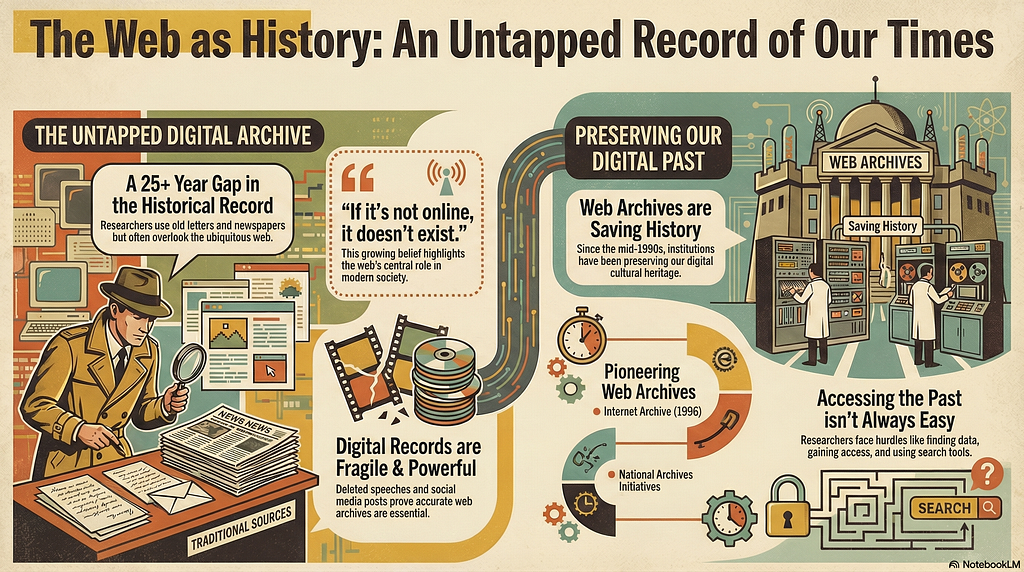
NotebookLM
Research, grounded synthesis, media assets

NotebookLM is a kind of “rest stop library”: you bring your own questions and references and it helps you interrogate them without pretending to be the internet. I first heard about it on a Steven Johnson’s podcast interview, and never left. The app has come a long way, even after some important people from the initial team left — you can now create and export an impressive range of media, and enhance your notes with multiple kinds of sources.
It is sadly true that Google has, repeatedly, killed great and beloved products, but NotebookLM is being integrated in the company’s suite of apps in a way that suggests some level of stability — for the features, at least, even if not for the whole application.
Durability ★★★★★ | Explicitly bundled into Google’s AI plans ecosystem, which seems to be a structural commitment.
Portability ★★★★☆ | The real corpus is already portable — PDFs, docs, links — and the notebook is an index/interpretation layer on top.
Redundancy ★★★★☆ | Notebooks can be shared publicly and revoked. The backup strategy is simply “keep the sources somewhere you control”.
Composability ★★★☆☆ | Strong inside Google’s gravity well, but weaker as a generalized automation node.
Cost realism ★★★★☆ | Premium tiers exist, but the product is positioned as part of broader Google AI subscriptions.
Zapier AI
Automation, workflow glue
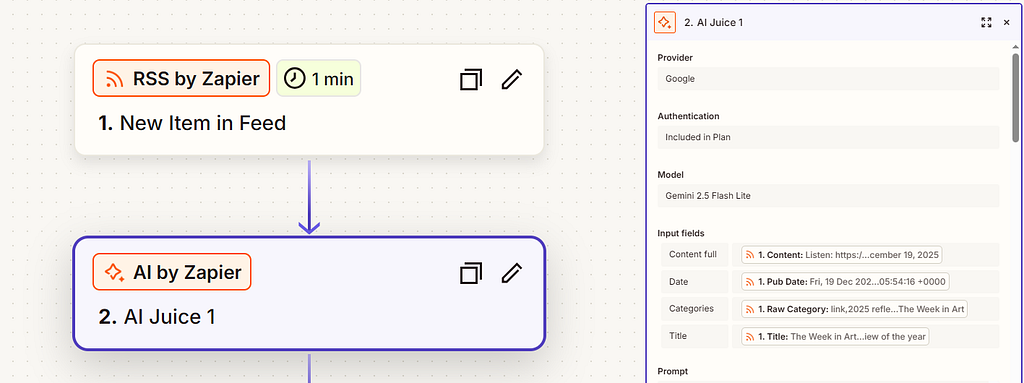
Zapier is an automation platform: you build workflows that move information between apps, like an efficient interstate exchange. In my projects, it’s been a solid backbone that helps me design and scale complex operations beyond their native constraints.
Its AI layer is not about chat : it allows you to place current AI models as a step inside a workflow so that it becomes a utility in the pipeline without you setting up a separate AI account. This capability is bundled with the subscription, so you get free access to models from OpenAI, Anthropic, and Google.
Durability ★★★★☆ | Zapier’s ecosystem has thousands of supported apps and integrations, which makes it less dependent on any single trend or model.
Portability ★★★★☆ | The real assets are portable targets — Docs, Sheets, email, webhooks — so the exit path is usually just rerouting.
Redundancy ★★★★☆ | You can mirror outputs into a second system by design, because Zapier’s whole logic is duplication.
Composability ★★★★★ | App integrations is the company’s entire thesis.
Cost realism ★★★☆☆ | While entry-level use is inexpensive, meaningful volume and complexity quickly push workflows into the more pricey tiers — so it’s durable infrastructure, but not permanently subsidized.
Miro
Collaborative mapping, AI teammates

Miro is a collaborative online whiteboard, and a pioneer in what is now becoming a dominant metaphor in interface design. It’s a kind of asphalt for thinking in public: the place where a strategy becomes maps, clusters, flows, workshop residue, and decisions captured as objects.
Its AI layer lives inside the canvas, meaning the product’s future is tied to the core interaction model rather than just bolted-on chat. Miro describes its recent Sidekicks as AI agents that act like teammates and thought partners that analyze board content to generate next steps, validate, and refine in real time.
Durability ★★★★☆ | It’s a mature category anchor, moving its AI into native collaboration primitives.
Portability ★★★★☆ | You can export boards as PDF, CSV, and single images.
Redundancy ★★★☆☆ | The export gives you a lifeboat, but the living value is still in the editable canvas.
Composability ★★★★☆ | Miro’s strength is that it can sit between tools as a shared surface , with an increasing number of integrations, and you can treat outputs as frames/artifacts to be shipped elsewhere.
Cost realism ★★★☆☆ | Collaboration platforms tend to tighten pricing over time. Miro’s AI sits on top of all the big frontier models.
Asana AI Studio
Work operating system, governance, AI workflows
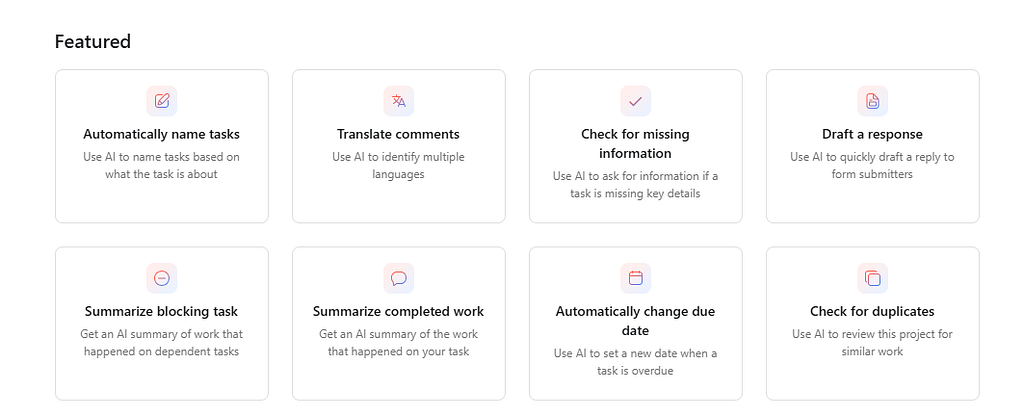
Asana is a leading project management software. The Studio is the platform’s attempt to embed AI directly into that operating layer: a no-code framework for teams to build workflows and bottom-up governance. I treat it as the dispatch center where work become legible and highly structured.
The AI Studio is becoming valuable precisely because it lives inside the project’s context and it can accelerate the boring middle (routing, summarizing, drafting, checking) without splitting the system.
Durability ★★★★★ | It’s a category leader. The risk here isn’t so much disappearance but slow enterprise drift.
Portability ★★★★☆ | Projects can be exported in multiple formats, including JSON.
Redundancy ★★★★☆ | Well-designed projects point outward to second homes — documents, drives, and repositories — so the system can be mirrored and rebuilt even if the platform becomes unavailable. Composability ★★★★★ | Asana becomes truly valuable when it can orchestrate work without demanding ownership of the work itself.
Cost realism ★★★☆☆ | AI features are based on credits-tokens: less like calculating a flat fee and more like estimating a utility bill based on usage and intensity. It sits on top of the big frontier models.
IFTTT
No-code automation workflows
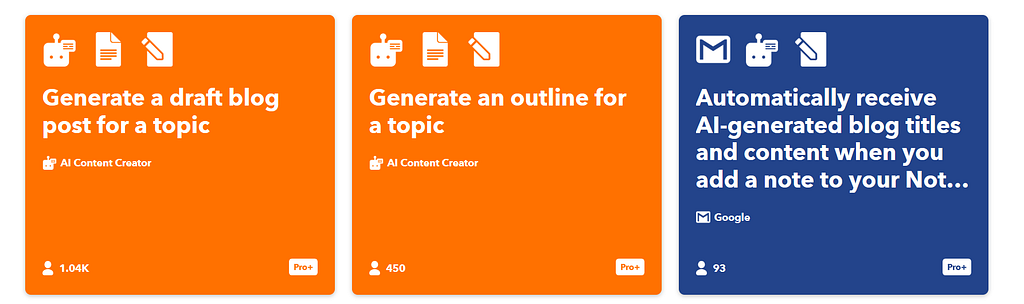
IFTTT is the OG of no-code connectivity platforms that allow users to automate tasks by linking disparate apps, devices, and services together. It’s especially good for quick personal or semi-professional automations and it has been adding competent AI services for content generation.
It’s like a local bus line with predictable routes, low friction, and great for short hops and routines. It’s Webhooks feature, for example, explicitly frames itself as a way to integrate tasks using HTTP, pointing to a time-honored ethos that supports and values the open web.
Durability ★★★★☆ | IFTTT has survived by being boring infrastructure rather than a single hype feature.
Portability ★★★★☆ | It supports and encourages open protocols. Redundancy ★★★★☆ | Perfect for “mirror this to that” patterns.
Composability ★★★★☆ | Broad but shallow. It connects many services cleanly, but it doesn’t let you articulate complexity: limited branching, minimal state, and fewer ways to chain logic than Zapier.
Cost realism ★★★★☆ | Their AI Content Creator is framed as Pro+: a reminder that the subsidy window will close, and you should treat AI steps as accelerators, not foundations.

Sundown Towns
Until the 1960s, all across the United States, all-White municipalities or neighborhoods practiced a form of racial segregation by excluding people via some combination of discriminatory local laws, intimidation or violence. There were never official maps or formal lists of the thousands of these towns across the U.S., and many of these policies were maintained through unwritten customs and intimidation rather than policy.
The Green Book addressed the pervasive danger of sundown towns through a strategic omission approach rather than through explicit warnings: gaps on the map signaled danger zones where Black travelers should not stop, or should pass through as quickly as possible.
I’ll do something different, while consciously stretching the metaphor, because the current AI landscape is filled with attractive spaces where one might be caught unaware and unprepared. This interpretation remains faithful to the original term: the boundary is enforced at nightfall, a moment of deep reliance, or long-term commitment. It’s the moment the platform decides you’re no longer a tourist, but a resident — and that is precisely when the digital architecture switches from welcoming to hostile.
It’s a risk model based on architectural features and structural exclusion, not on direct, overt physical violence. And yet, this entails the profound, costly, and disruptive threat of sudden digital eviction.
A final, perhaps strange, note of affection: I genuinely love these tools and I use them almost daily because they are truly innovative — sometimes brilliant — and because in the daylight they make the work feel lighter, faster, and more creative. Calling them “sundown towns” is not a moral verdict. Some cities are magnetic, effervescent, and worth the trip, even when you wouldn’t buy an apartment there.

Perplexity
Deep research, executive reports
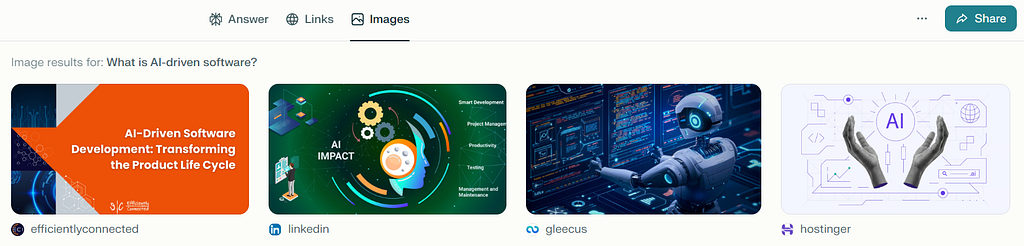
Perplexity searches the live web and synthesizes a response with citations. In practice, it’s the quickest way to get oriented — headlines, claims, counterclaims, primary sources — before you move the work into something you actually own.
The company’s legal exposure is tightly bound to what makes it great: it’s an answer engine that summarizes other people’s work at speed. That business model is now being challenged in court on multiple fronts, by The New York Times, News Corp’s Dow Jones, and the New York Post. Then there’s the scraping layer. Reddit sued Perplexity in 2025 over alleged “industrial-scale” scraping of user comments for commercial purposes, adding another serious legal vector that sits right under the hood.
None of these outcomes are decided yet, but as a user building professional systems, the key point is operational: when a tool is fighting legal battles over its core inputs, one should treat it as a daylight engine and keep the research exported, duplicated, and reconstructible elsewhere.
Durability ★★★☆☆ | High momentum and publisher partnerships, but it’s operating under real legal constraints that can change product behavior overnight. Also, an acquisition in 2026 would not be surprising.
Portability ★★★☆☆| You can move the value out: copy answers, capture citations/URLs, export PDF reports, and use the API if you’re building workflows.
Redundancy ★★★☆☆ | Redundancy is on you: save sources, export quotes, screenshot critical pages, and keep a second path.
Composability ★★★★☆ | Stronger than most consumer AI tools because it explicitly offers developer-grade interfaces that slot into other systems.
Cost realism ★★☆☆☆ | The value is excellent because it’s still priced like a land-grab. Expect pricing and limits to tighten as subsidies end and legal/compliance costs rise.
Civitai
Image and video generation
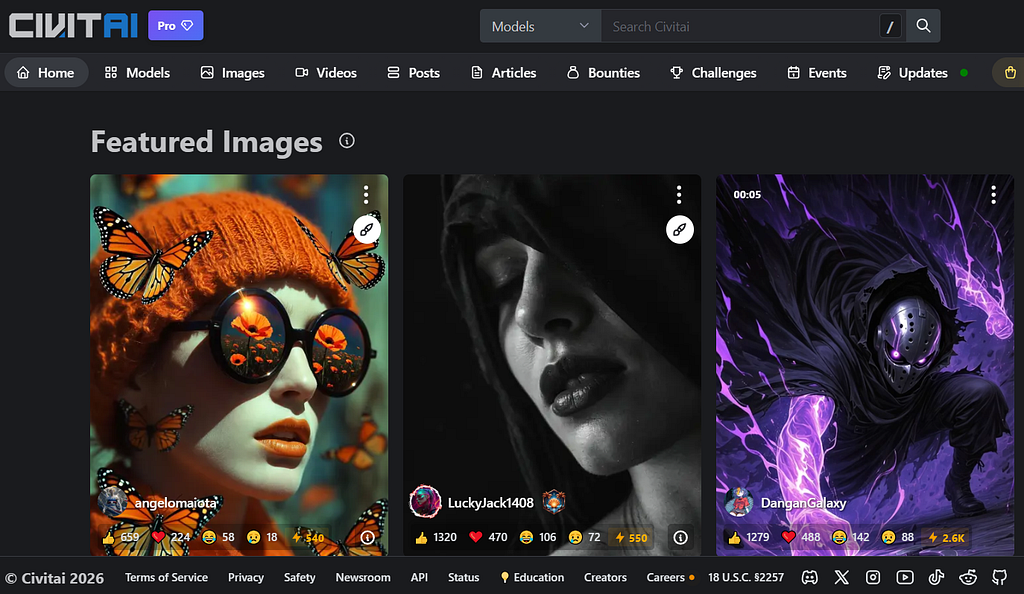
Civitai is a community repository and a marketplace-adjacent hub for generative image models — especially Stable Diffusion checkpoints, LoRAs, and related tooling. It’s hugely useful if your practice touches image systems: you can discover niche aesthetics, production-ready fine-tunes, and the “street knowledge” that never makes it into official docs.
The platform is controversial and it has been hounded by legal issues: payment rails, content policy, and the liability minefield around nonconsensual sexual imagery and real-person likeness models.
In 2025, CivitAI tightened rules around content, a policy shift that is part of a broader public and regulatory backlash against deepfake harms, where platforms become targets not only for lawsuits but for enforcement and reputational collapse.
Civitai remains an interesting city to visit , if you can stomach it.
I use it to discover models, learn aesthetics, and tap into community intelligence — but the legal pressure points are exactly why it remains a sundown town in this guide. The safe move is always the same: download what you rely on, mirror metadata, and keep your library somewhere you control — because the platform’s boundaries can tighten faster than your project timeline.
Durability ★★★☆☆ | Massive community gravity, but the platform sits in a high-friction zone.
Portability ★★★★☆ | The core asset class is portable: you can download and run models locally, keep hashes/manifests, and migrate.
Redundancy ★★★★☆ | Strong if you act like a hoarder with standards: mirror the model files you rely on, store metadata, and keep a local library.
Composability ★★★☆☆ | There is an API, but it’s primarily read-oriented. It’s not designed as a composable production engine.
Cost realism ★★★☆☆ | Discovery and experimentation are cheap, but anything tied to on-platform generation and internal credits is subject to sudden policy/pricing changes .
https://medium.com/media/7cfbcd08b3102a86c1a153e910916bc2/href
Frontier
As we’ve seen throughout this essay, not every valuable stop is worth your time and attention. Some are, precisely because they’re early: subsidized, sharp-edged, and still being invented in public. That’s the frontier: the place is thrilling, but the land rights are shifty and not guaranteed.
The following apps are spaces where the upside is real, the atmosphere is electric, but where the long-term municipal budget is uncertain. You shouldn’t build your house there. You can build prototypes, develop taste, and harvest speed — while keeping your work portable and your exits rehearsed.
Huxe
Audio personal assistant
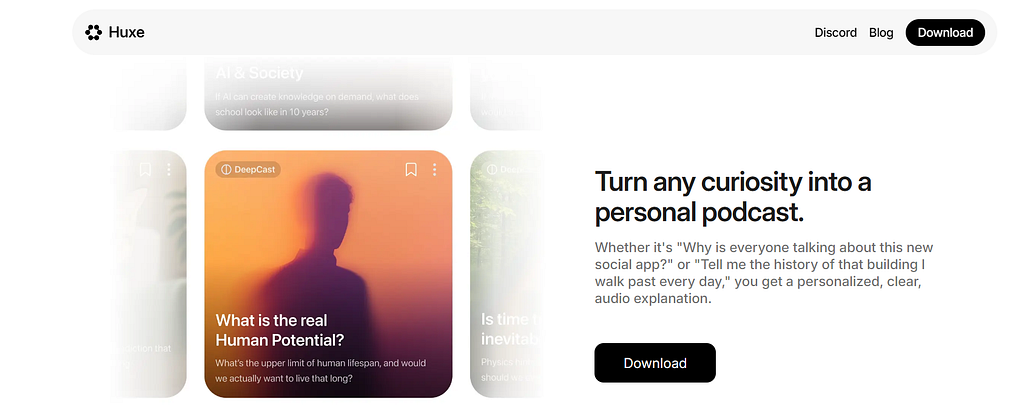
Huxe is an audio-first AI app that turns your custom sources into a short briefing, and that lets you explore topics through generated “podcasts” with multiple AI hosts. It leans into the same instinct that made NotebookLM’s Audio Overviews viral: people want information in motion, off-screen, conversational.
The app feels like a new interface grammar: audio as a primary research surface and not a byproduct. The team includes former NotebookLM leadership, and its privacy posture is unusually legible for a young app: their policy says they don’t use identifiable email/calendar content for model training without explicit opt-in, and they describe using third-party providers under strict agreements. But it’s still a startup competing with giants who can absorb the entire concept as a feature.
Durability ★★☆☆☆ | Strong team and a clear product thesis, but high competitive risk from platform owners who can replicate distribution. Portability ★★☆☆☆ | The value is in the audio and briefing flow, but archive exports aren’t the product’s headline promise yet.
Redundancy ★★☆☆☆ | Still up to the user: for now, treat Huxe as a listening surface, and store the actual notes/decisions elsewhere.
Composability ★★★☆☆ | It creates inputs from custom sources like RSS, but it’s not yet an obvious node in a larger professional toolchain.
Cost realism ★★★☆☆ | It’s been marketed as free at launch, which is wonderful and also a reminder: pricing will have to reconcile with compute and growth.
FLORA
Creative workflow canvas
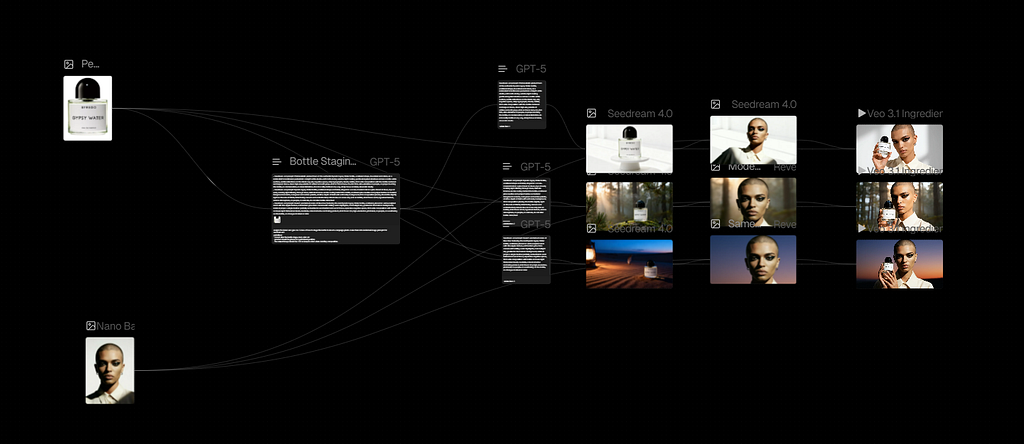
FLORA positions itself as an AI-powered “infinite canvas” built for creative professionals. The product’s own language is consistent: “intelligent, infinite canvas” and “every creative AI tool, thoughtfully connected,” spanning text, image, and video generation. It’s trying to make the new creative process legible and repeatable, closer to a studio system than to a slot machine.
I think of it as a kind of Miro-meets-Zapier app, and because it’s oriented around media assets that you can export and reuse, its portability story is already better than most “AI toys.” Still: it’s early, it’s compute-heavy, and its long-term pricing posture is unknown. Frontier logic applies: exploit the advantage now, but don’t bet your life on the town charter.
Durability ★★★☆☆ | Compelling differentiation and professional focus, but still an early company in a crowded space.
Portability ★★★★☆ | The outputs are standard creative assets, and FLORA itself speaks in terms of templates and batch exports.
Redundancy ★★★☆☆ | You can export assets and workflow documentation, but the living canvas is still platform-dependent.
Composability ★★★★☆ | Its entire proposition is composability inside the canvas: multiple generative capabilities connected into reusable workflows. External composability may mature later.
Cost realism ★★☆☆☆ | Any tool that centralizes multi-model media generation is exposed to subsidy reversal. Expect pricing and limits to evolve as the market cools.

As of early 2026, Generative AI is still the leading innovation category in the tech industry across the world.
Transformers propelled the current wave because they made scale practical: self-attention lets models learn long-range relationships while training efficiently in parallel on GPUs or, more recently, Google’s TPUs. From there, a single architectural idea became an industrial pattern: pretrain on vast amounts of data, then fine-tune or align for tasks — chat, search, coding, translation, customer support, analytics, creative writing.
This new software layer based on “natural language” became a programmable interface across products and is the basis of the current infrastructure boom. The other pillars of the generative architecture — diffusion models, GANs, VAEs — reframed image generation, structured latent representation, and a whole gamut of hybrid systems.
Gen AI tools represent a creative supply shock in design, marketing, entertainment, and in a number of other industries that can benefit from cheap, fast ideation and the multiplication of professional-grade production assets. The current set doesn’t need a new core architecture to keep producing novelty — it needs cheaper, greener energy and better, fairer, and more realistic business models.
https://medium.com/media/dc3c0cac148e9435deb4fd90fb6aecab/href
This AI boom makes everything feel fluid and cheap, and it tempts us into building inside the rooms we don’t control.
The correction, when it arrives, won’t just be felt in layoffs and valuations, in social upheaval and geopolitical turbulence. It will also be smaller and more intimate. We keep mistaking excitement for shelter.
As with every piece of writing about the digital universe, this guide will start to become outdated as soon as it’s published. The machines won’t wait for these sentences to settle, and the ground will shift while the page is still loading.
Platforms are born, crowned, absorbed, erased, and renamed in cycles that have no regard for human memory or merit. Build with the knowledge that every road ends, every city declines, and every system believes itself eternal until it isn’t.
The work that endures is that which was never fooled by permanence.

Recommended Reading
The Rise of the Software Creator, Anu Atluru
Spatial Software, John Palmer
2025: The year in LLMs, Simon Willinson
Why We Can’t Quit Excel, Max Chafkin and Dina Bass
Why AI Is A Philosophical Rupture, Tobias Rees
A Tool That Crushes Creativity, Charlie Warzel
Machine Yearning, Sonja Drimmer
AI That Evolves in the Wild, George Dyson
A Green Book for AI Apps was originally published in UX Collective on Medium, where people are continuing the conversation by highlighting and responding to this story.